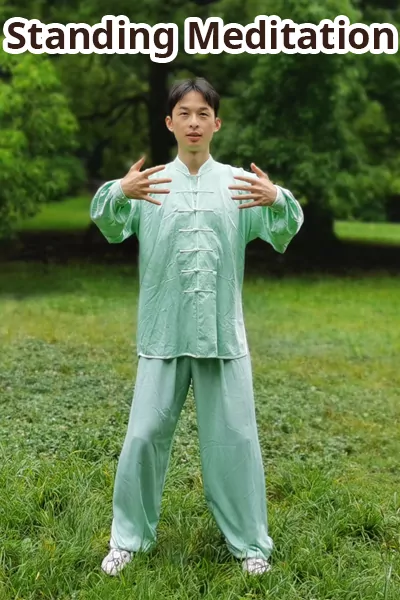
Returning to Master Zhang’s Yiquan school in Xi’an for my second visit was nothing short of transformative. The week-long intensive training with Master Zhang and his dedicated disciples opened my eyes to the profound depth of this complete martial art. In my previous article, I touched upon how Yiquan emphasizes the harmonious training of the mind and body, enabling practitioners to recruit maximum muscle fiber output. This remarkable method results in powerful movements, allowing the kinetic chain to transfer tremendous energy with every conscious action and strike.
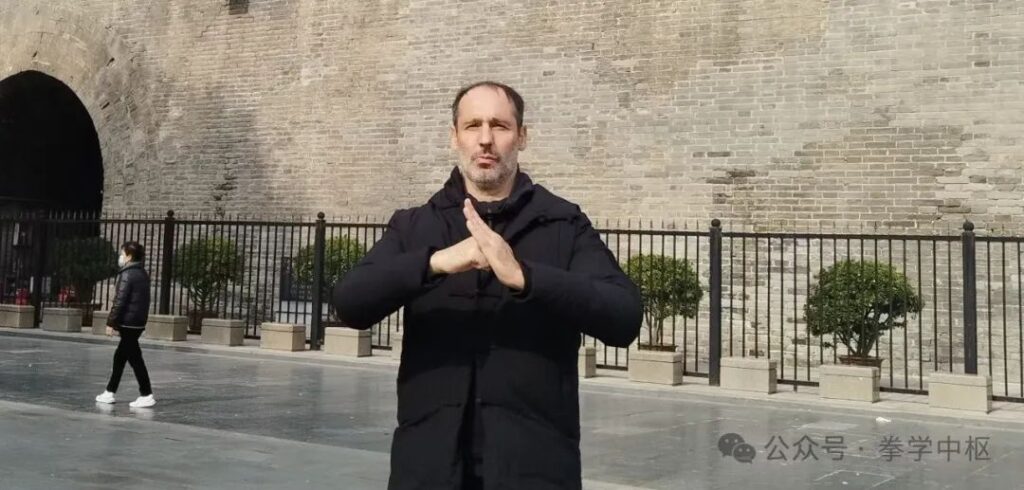
This time around, the training was more intense than before. To an untrained observer, the movements of the students might seem subtle or even simplistic; however, beneath the surface lies an immense stimulation of intrinsic muscles. This constant motion engages the neuromuscular system in ways that go beyond mere physicality. As a novice immersing myself in this profound practice, I learned that true Yiquan training requires accepting the demanding effort of reprogramming both the central and peripheral nervous systems.

The Biomechanics of Yiquan: Harnessing Posture for Maximum Efficiency
A pivotal aspect of Yiquan is its emphasis on biomechanics, essentially conditioning the body to adopt postures that provide maximum advantage in movement and force generation. The body is naturally programmed to work as a cohesive unit, effectively transferring force to the limbs that operate like a second-class lever. This lever arrangement is particularly advantageous because it allows for the load to be positioned between the fulcrum (the joint) and the effort (the muscle contraction).
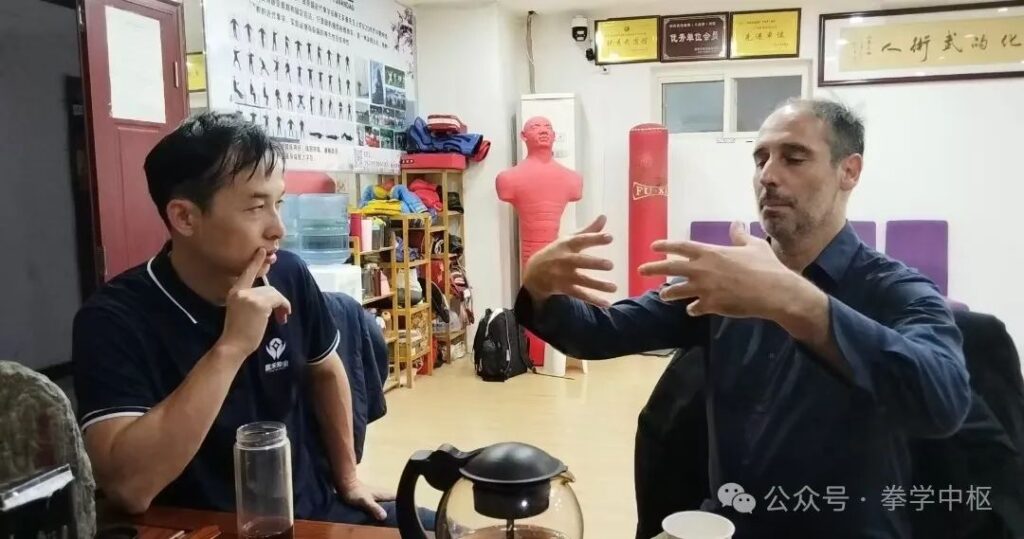
When practitioners engage in movement, their posture and limb alignment are intentionally arranged so that the load—whether it be the practitioner’s own body weight or the impact of a strike—is always optimally positioned. This biomechanical principle enables the body to function effectively as a vessel, channeling the power that the mind can recruit from the skeletal muscles.
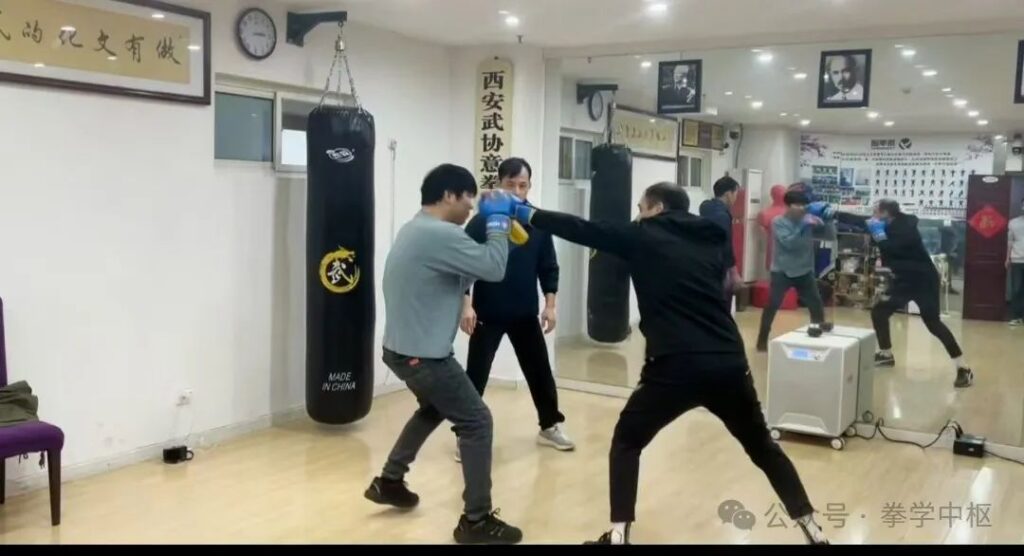
For instance, during a striking technique, as the practitioner moves, the careful positioning of the body creates an efficient transfer of energy from the ground up through the feet, into the legs, and into the upper body. This arrangement not only maximizes the force applied to the target but also minimizes the energy expended by the practitioner. Through Yiquan, I discovered that correct posture is not merely about aesthetic alignment; it is crucial for the biomechanics of movement, reinforcing how every action is an orchestrated interaction among the body, mind, and the forces at play.
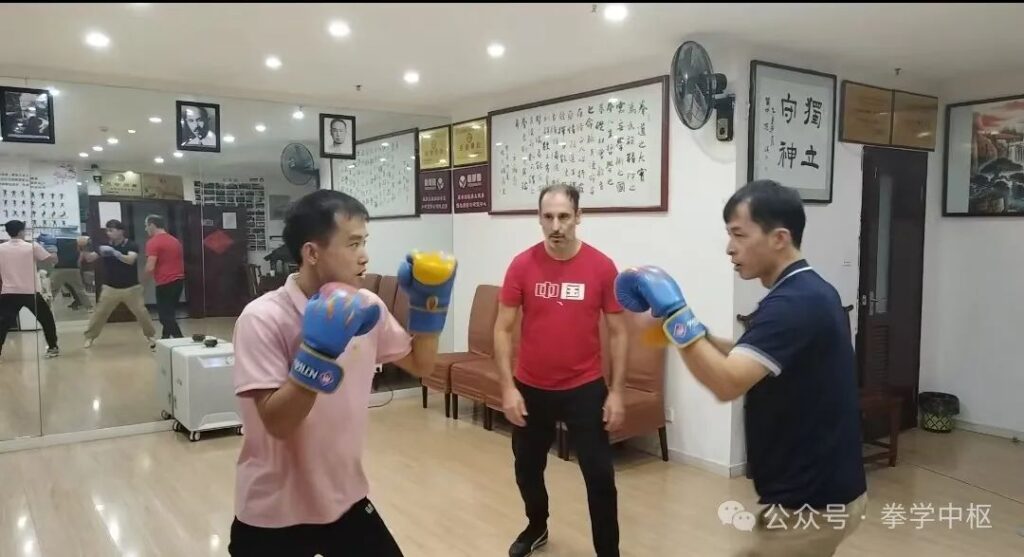
Master Zhang, a true master, guided us through this rediscovery of what our minds and bodies can accomplish as a unified force—without any separation. This journey is not without its challenges. Each obstacle often arises from the old beliefs held by the very mind we are training to transform. The average mind, even that of a fighter trained in other martial arts, tends to dwell in a misconception: it perceives results as derived from opposing states, such as hard versus soft or fast versus slow.
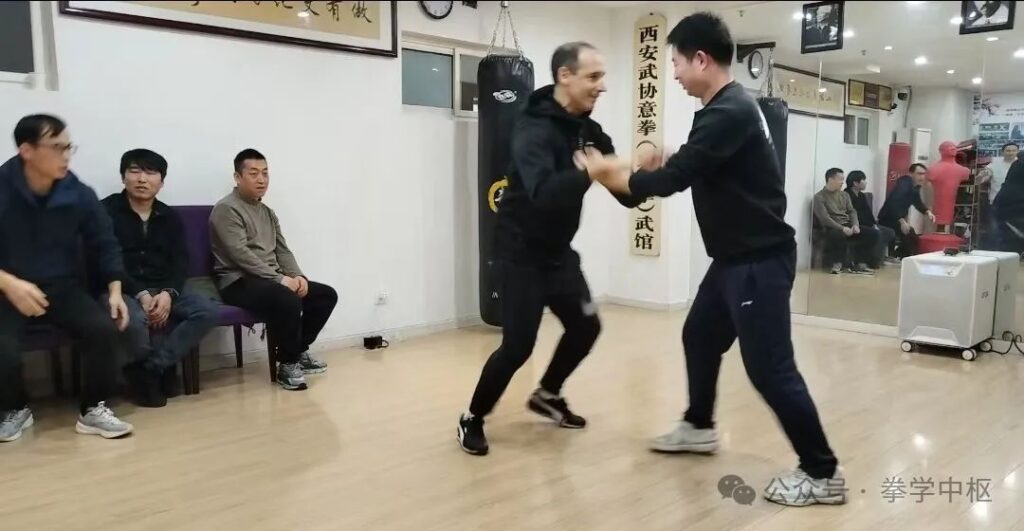
In contrast, Master Zhang employs Yiquan to teach the language of the body, revealing that true power in a strike or movement emanates from a state of non-duality. This concept is revolutionary for any martial artist who has been conditioned to compartmentalize their understanding of strength and technique.
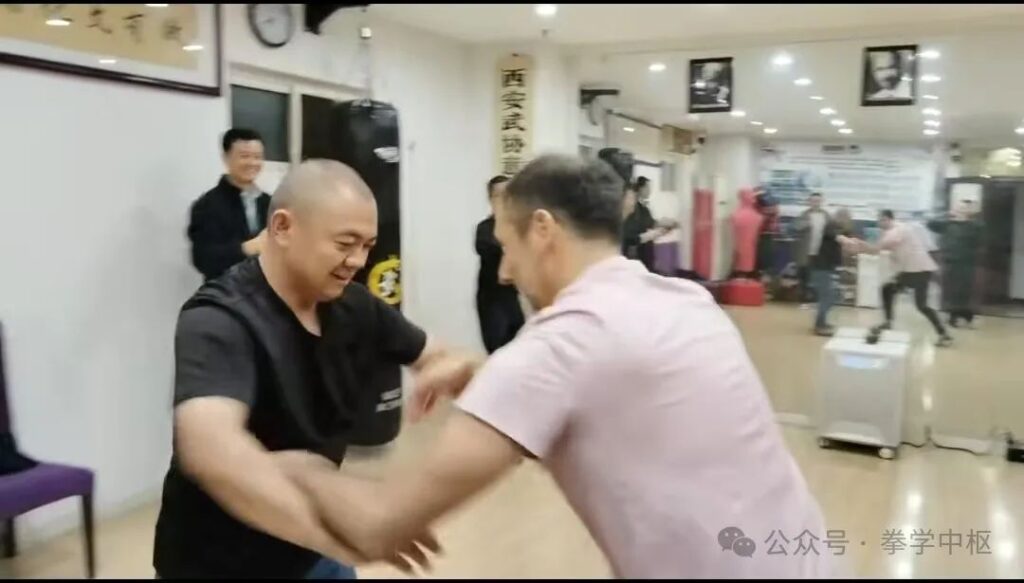
What I wish to share with all martial artists—experts and novices alike—is the invitation to experience Yiquan at least once. Even a fleeting glimpse into its practice can provide insight into the essence of thousands of years of Chinese mystic wisdom encapsulated within this martial art. It’s an experience
that transcends conventional training, inviting you to explore the limitless potential of your mind and body working in unison.
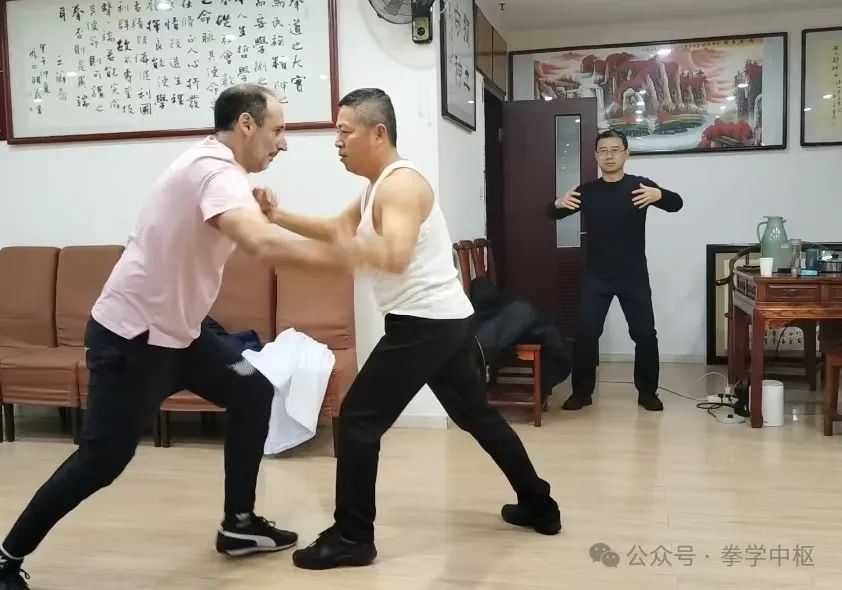
In the end, my second visit with Master Zhang reaffirmed that Yiquan is not just a martial art; it is a profound journey of self-discovery and holistic development that challenges the very fabric of how we understand movement, power, and the interconnectedness of all things.
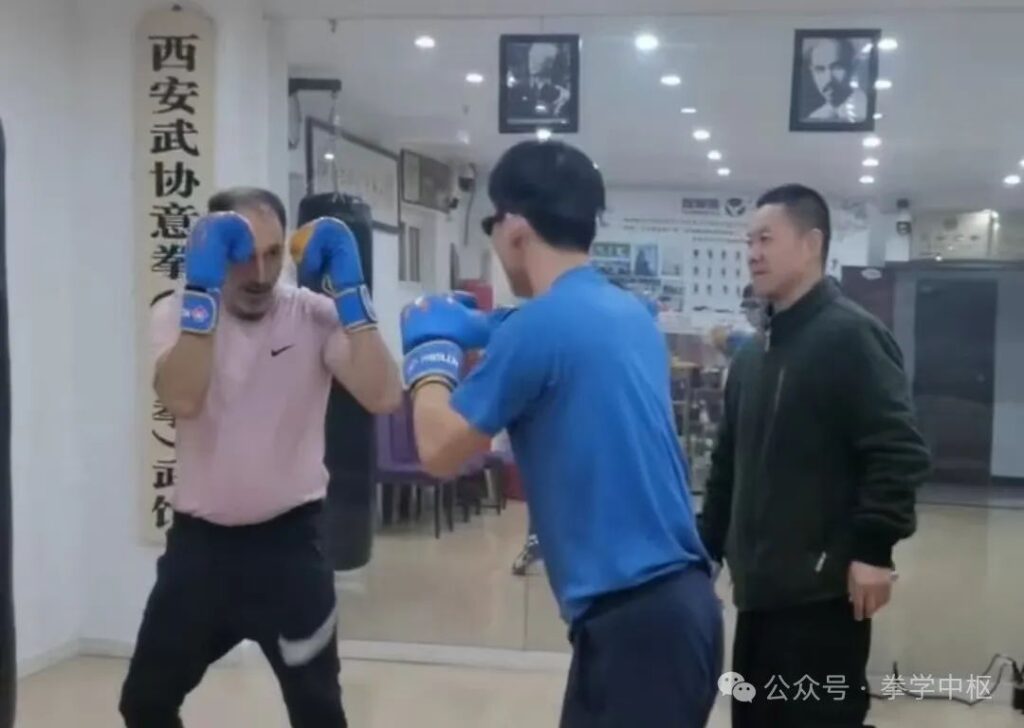
A sparring with Master Zhang's student Song Gao.
A sparring with Master Zhang.

Yiquan Park Popular Courses
Zhanzhuang is the foundation of Yiquan, and the two should not be viewed as separate practices. They are listed under different sections on this course page simply to make them easier to find for people who are not yet familiar with Yiquan.
Course Level: Beginner
This is a systematic self-study Zhanzhuang (Standing Meditation) course to develop your body and mind to a greater level. Your health condition can be improved quickly.
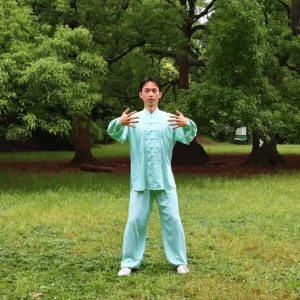
Course Level: Intermediate
This course will challenge you but provide with you a new horizon of Zhanzhuang. You may obtain quicker and further health improvement.
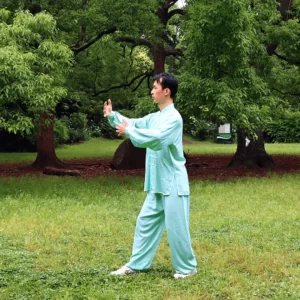
Course Level: Advanced
The Tiger Stance, Dragon Stance, and One-Legged Stance are known as special stances—demanding postures that cultivate internal power, balance, and rootedness.
They require a profound grasp of body mechanics, relaxation, and the harmonious integration of mind and body.
Practicing these stances can elevate leg strength, whole-body balance, and coordination to extraordinary levels.
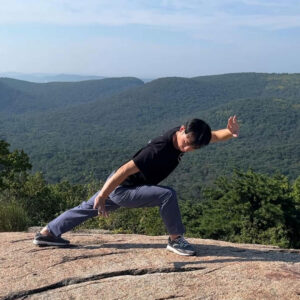
Course Level: Beginner
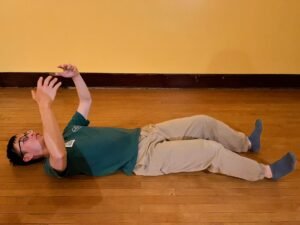
This course is designed for older adults, people who are physically weak, and those living with disabilities or limited mobility.
This course may also be suitable for people recovering from an injury or major surgery, as well as those experiencing reduced strength or mobility after illness or an extended period of inactivity.
Course Level: Beginner
As an interesting exercise that can be applied to health development, Shili (force testing) prepares basic movements for self-defense skills from Yiquan martial art system. This online course introduces 10 kinds of Shili training on the Parallel Step.
It’s a crucial step in Yiquan, bridging the static posture practice of Zhanzhuang to more dynamic applications.
Course Level: Beginner
This training introduces the fundamental & essential footwork of traditional Chinese martial arts—skills that can be seamlessly applied in real combat situations.
Friction Stepping can be practiced as an effective leg-strengthening exercise, building powerful legs while improving balance and footstep alignment.
Course Level: Intermediate
Course Level: Intermediate
Fali is the fourth step of the Yiquan system and focuses on generating power for real combat. After achieving a high level of whole-body integration through Zhanzhuang, Shili, and Friction Stepping, training shifts toward releasing that unified force in a split second.
Course Level: Advanced
In Yiquan, Fali is trained as the expression of explosive power for practical combat. In this course, the basic Fali movements are developed into functional striking methods. You will systematically study punches, kicks, palm strikes, as well as knee, elbow, and head strikes. These striking methods are practical combat techniques built upon the foundation of whole-body power.
Course Level: Advanced
Whole-body integration lies at the core of Yiquan training. Staff and sword practice brings together Zhanzhuang, Shili, footwork (Friction Stepping), Fali, and sound testing. Through this process, the body and the weapon become unified, allowing practitioners to refine and enhance whole-body power—even when without the weapons.
About the instructor
I am Song GAO, Yiquan inheritor & instructor, Zhanzhuang expert in health & wellness.
I was born in 1987 and grew up in a village in China. I began professional Yiquan and Zhanzhuang training with Master Zhang Yongmou, a fourth-generation Yiquan inheritor, in 2016.
After four years of training at Master Zhang’s Yiquan school, including three years as an assistant instructor, I became qualified to teach. I began teaching online in early 2020.
I traveled to the United States to teach Zhanzhuang and Yiquan in both 2024 and 2025.
I accepted my first two disciples in 2024: Hosh from Bisbee, Arizona, and Lyle from New York City. In 2026, Gregor from Slovenia became my third disciple.
In 2026, I largely achieved my goal of becoming a full-time Yiquan teacher.